
I, Medusa Book Review: Modern Lens on a Classic Tale
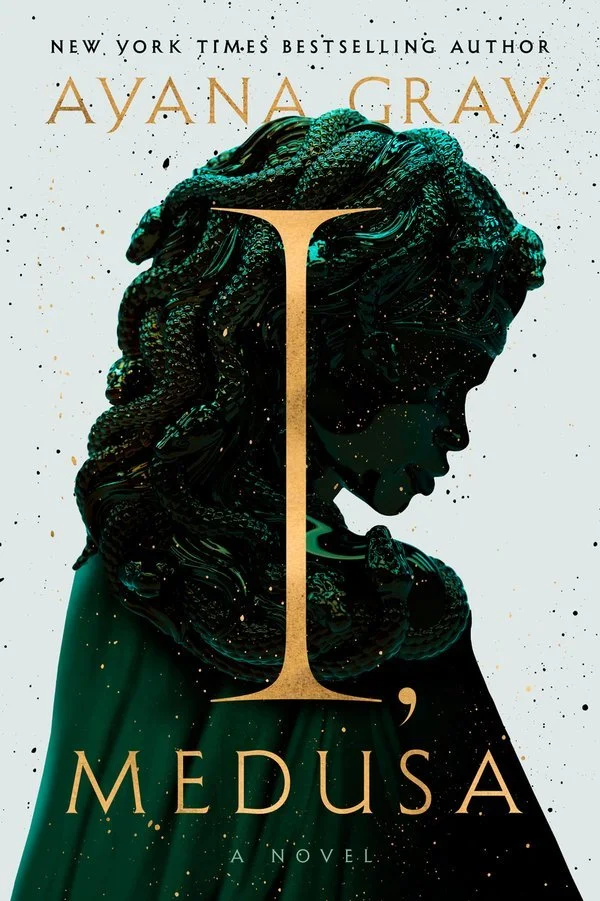
For readers who love: Greek mythology, historical fiction, fantasy.
My rating: 4.75/5 stars
Triggers: Rape, domestic violence, murder, slavery, grooming.
If you stayed up late reading Percy Jackson books as a kid and love Epic: The Musical, we have a lot in common.
The revival of Greek mythology in pop culture is making my pre-teen heart soar. After you watch The Odyssey (2026) and wait for the next season of Percy Jackson to hit the screen, I highly recommend adding I, Medusa by Ayana Gray to your TBR.
When I heard about this book and found out Ayana Gray wrote it, author of the Beasts of Prey series, I was HOOKED.
Gray retells the story of Medusa, letting us walk alongside the classic character on her journey from maiden to monster.
Purchasing using my affiliate link supports independent bookstores on Bookshop.com. I also earn a commission at no extra cost to you.
Publisher’s Summary (from Penguin Random House):
“Meddy has spent her whole life as a footnote in someone else’s story. Out of place next to her beautiful, immortal sisters and her parents—both gods, albeit minor ones—she dreams of leaving her family’s island for a life of adventure. So when she catches the eye of the goddess Athena, who invites her to train as an esteemed priestess in her temple, Meddy leaps at the chance to see the world beyond her home.
In the colorful market streets of Athens and the clandestine chambers of the temple, Meddy flourishes in her role as Athena’s favored acolyte, getting her first tastes of purpose and power. But when she is noticed by another Olympian, Poseidon, the course of Meddy’s promising future is suddenly and irrevocably altered.
When her locs are transformed into snakes as punishment for a crime she did not commit, Medusa must embrace a new identity—not as a victim, but as a vigilante—and with it, the chance to write her own story as mortal, martyr, and myth.
Exploding with rage, heartbreak, and love, I, Medusa portrays a young woman caught in the crosscurrents between her heart’s deepest desires and the cruel, careless games the Olympian gods play.”
First Thoughts
I didn’t know what to expect when I started the book.
I didn’t know if Medusa was the kind of character who always had an evil streak or was coaxed to the dark side. The longer I read, the more I was shocked by her innocence.
She was no villain at all.
I kept waiting for the gotcha moment when she’d ultimately flip to the dark side (as if I was reading some Star Wars novella). But no, she was no villain. She was a young woman—a teenager, really.
Medusa is relatable, dealing with regular struggles like
making new friends,
managing her family’s expectations,
and fixing her mistakes.
The Plot Thickens
All I could feel was sorry for her.
Medusa grew up surrounded by sisterhood. She and her sisters swapped secrets and support while styling each other’s locs. It’s a scene I instantly connected with as a young, Black woman.
She left for Athens in search of a similar sisterhood. Again, her innocence struck me. She had no knowledge of sexuality nor the evilness of
prejudice,
rape,
lies,
or trickery.
An eeriness of the dangers of adulthood loomed over her like a cloud while she did her best to become a priestess of Athena.
My protective older sister streak activated so many times while reading—especially during her creepy encounters with Poseidon.
Her storyline was cursed from the moment she stepped foot in Athens. I held space for her, for her rage and sorrow.
Medusa’s climactic transformation was an ill attempt at monstrous isolation. Instead, it fueled her power and purpose.
Favorite Quotes
“I'm grateful now to know the truth, that the only person who can give me purpose is myself. As the world fades, I find myself wondering if perhaps purpose is not a single thing one finds, but rather a thing one finds over and over again.”
“Your voice and your truth will never hold weight unless you also learn to hold power.”
Final Thoughts
Brutal and unforgiving, Medusa’s journey leaves you with a new perspective on this ancient story and character.
Medusa is a mirror for characters and readers to reflect on their harsh judgement of women cast out of society, past and present.
I highly recommend this book for its feminist take on an ancient classic. Gray emphasizes Medusa’s character and humanity while leaving readers to reflect on
sisterhood,
power,
agency,
and truth.
Even though this book is set in the past, Medusa’s story will live on through Gray’s fresh perspective.
